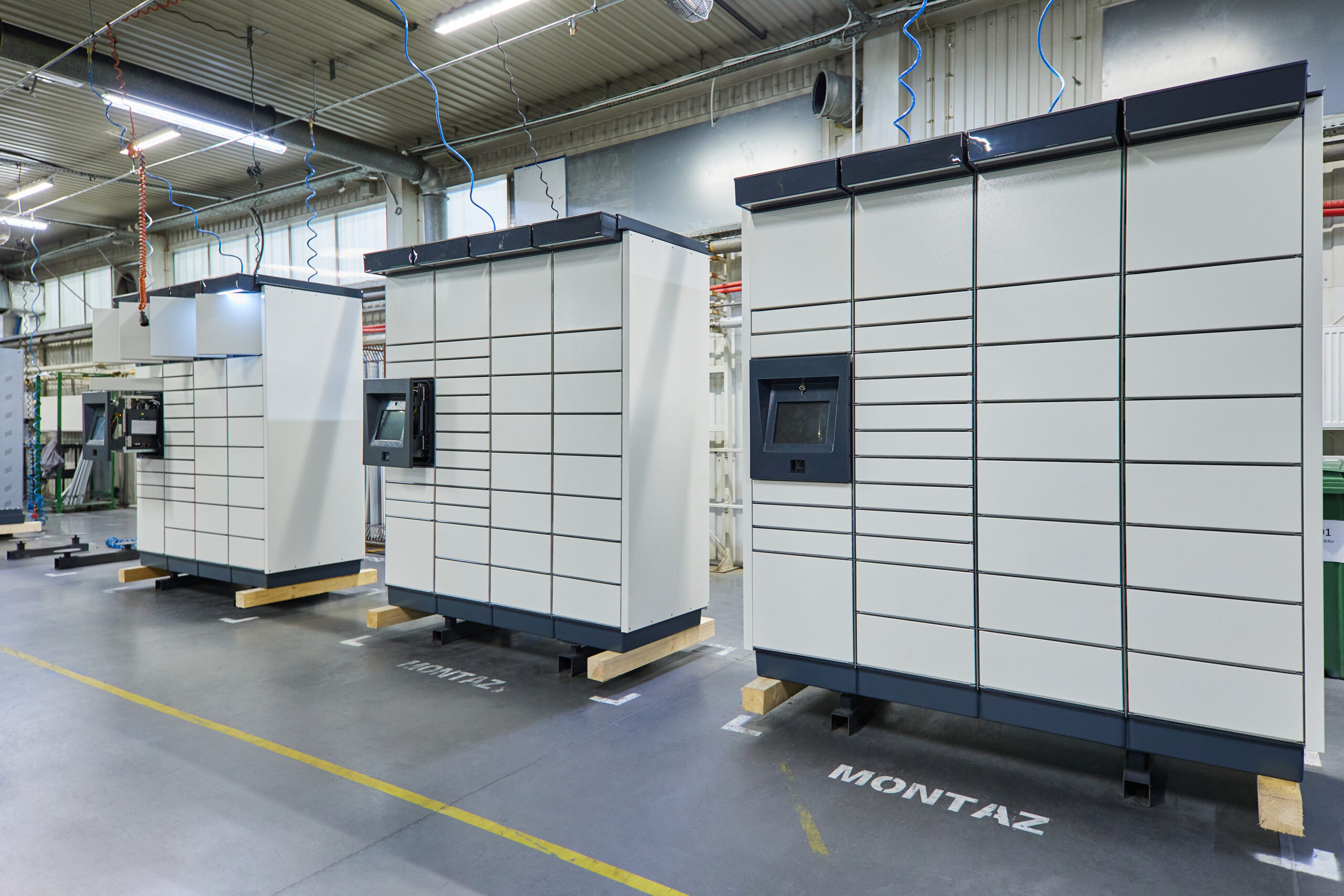
The self-service equipment market is growing at a rapid pace. Today, a simple, traditional vending machine is no longer enough. Companies are looking for increasingly advanced technological solutions, such as smart vending lockers and robotic vending machines. Regardless of the specifics of your project and the level of technological advancement you need, the first step is to make a key business decision: choose a manufacturing partner who will not only deliver your order but also meet several other important criteria.
From idea to implementation: what determines the success of a hardware project?
The design of every device comes with specific engineering challenges. Whether a project involves creating a compact locker-based device or a distribution system powered by a drawer or drum mechanism, the choice of manufacturer will shape the entire future of the project.
This decision will affect not only the final cost of the vending machines coming off the production line. Above all, it will determine the stability of the supply chain, technological consistency, and the market position you will achieve.
Doświadczeni dostawcy automatów doskonale wiedzą, że współczesny biznes wymaga dziś znacznie więcej niż tylko montażu gotowych elementów z blachy i elektroniki. Experienced vending machine suppliers understand that modern business requires much more than simply assembling ready-made sheet metal components and electronics.
Choosing a manufacturing partner for a hardware project – why is it one of the most important decisions?
Bringing a new self-service device to market is a significantly more complex and demanding process than launching software. Choosing the right partner for device development and mass production is one of the most important decisions in the entire project, directly affecting business profitability and your brand reputation.
The market for vending machine suppliers is becoming increasingly professional and competitive. Today’s vending machine provider can no longer be just a passive contractor who simply fulfils orders based on provided documentation.
A modern production facility and declared manufacturing capacity are not enough either. What should you consider when choosing a vending machine manufacturer? The key factors include:
engineering expertise,
proven experience in introducing new products (NPI),
the ability to develop and scale production quickly,
a manufacturer’s stable financial foundation.
A strong manufacturing partner is a guarantee of security – it minimizes the risk of sudden supply disruptions at the moment when your sales start growing rapidly.
How to choose a manufacturer wisely? 7 key criteria
The lowest bid in a tender process can be misleading and, in the long term, may generate significant hidden costs. Delivery delays, design errors, or insufficient quality control can quickly outweigh the savings achieved through a seemingly cheaper purchase. Experienced partners build relationships based on predictability and full transparency.
The cooperation should be based on a partnership between both companies’ teams rather than a rigid client-contractor relationship. A reliable partner gets involved already at the analysis stage, helps optimize the design for manufacturing, supports schedule planning, and identifies potential risks well before mass production begins.
At later stages, several factors become particularly important: regular communication, clear progress reporting, and quick response to emerging challenges.
What should you look for when auditing a manufacturer? Key criteria include:
engineering expertise and an in-house R&D team capable of scaling the project and proposing meaningful improvements,
proven experience in smoothly transitioning from the prototype stage to repeatable high-volume production,
process maturity in managing a highly complex supply chain (BOM) consisting of thousands of components,
operational transparency and implemented, measurable KPIs for production and logistics,
a clear and secure support policy, including reliable long-term support, transparent warranty terms, and spare parts availability within a reasonable timeframe,
the partner’s financial stability, enabling secure material sourcing and inventory preparation for large-scale production,
a business model that ensures the manufacturer will not compete with you in your target market.
Industry-specific requirements and engineering expertise. Why experience in your niche matters
The self-service equipment market is characterized by enormous structural diversity. A simple vending machine dispensing cold beverages is a completely different type of solution from an advanced vending device designed to dispense specialized products.
A modern vending machine for a corporate environment has different requirements than dedicated equipment designed for a large manufacturing company. Each of these projects requires a different set of engineering capabilities.
This is particularly evident in the industrial sector. A modern automated tool cabinet requires seamless integration with internal facility systems, as well as software for managing employee access permissions.
A specialized PPE dispensing cabinet, operating as a reliable workplace safety vending system, requires exceptional mechanical precision. Any downtime in dispensing protective clothing or work tools could potentially bring an entire production line to a standstill.
In every case, a smoothly operating product dispensing mechanism is essential (pushers, elevators, drum systems, or spirals). Equally important are modern integrations with customer systems (e.g., MDB protocols, RFID employee card authentication) and advanced ERP system integration (such as SAP or Microsoft Dynamics) to enable real-time inventory reporting.
How to successfully move from a prototype to full-scale production
Building a single working prototype in a laboratory environment is relatively simple. The real challenge begins when hundreds or thousands of identical machines need to be manufactured while maintaining the same quality standards and performance parameters.
The most common mistakes made by startups and companies developing new hardware products result precisely from a lack of preparation for this stage. These include:
designing without considering the realities of mass production,
testing components under demanding conditions too late in the development process,
incomplete technical documentation.
Such mistakes inevitably lead to significant delays and unnecessary costs.
This is why a professional manufacturing partner should offer a formalized DFM (Design for Manufacturing) process from the very beginning of the cooperation. DFM involves a detailed review of technical documentation, an analysis of manufacturing structures, and the preparation of an initial production sample. The manufacturer’s engineers recommend technological optimizations that help reduce assembly time, eliminate potential failure points in the design, and lower production costs without compromising the device’s functionality.
It is worth verifying whether a potential partner has the necessary technological capabilities to manufacture both standard devices and, for example, a customized, tailor-made vending machine perfectly adapted to the customer’s needs. The ability to design flexibly enables a smooth transition through the entire process: from prototype, through pilot production, to full-scale manufacturing.
An important indicator of a supplier’s maturity is the ability to manage a highly complex product structure (BOM – Bill of Materials). This is particularly evident in projects involving advanced custom vending machines. A great example is the robotic Delipop machine, which consists of more than 2,500 individual components listed in its BOM.
The more components involved, the greater the logistical and assembly challenges. A manufacturing partner must have full integration capabilities and provide box-build final assembly, efficiently combining the mechanical structure with advanced electronics, touchscreens, payment readers, industrial computers, and IoT peripherals.
Facts, not marketing claims. How to verify a manufacturer’s standards and reliability
The evaluation of a potential partner should not be based on marketing promises, but on hard data and measurable performance indicators (KPIs).
The first step should always be a personal audit of the manufacturing facility and production site. It is essential to verify whether the partner manufactures key components in-house or relies on external subcontractors. Every additional subcontractor introduces increased risk, both in terms of reduced quality and potential delivery delays.
The best “quality certificate” of a manufacturer is the length and continuity of its relationships with existing customers. RR Robotics’ more than 14 years of uninterrupted cooperation with InPost in the production of parcel lockers is undeniable proof that high quality can be maintained over many years, not just during a single project.
Equally important are implemented formal standards and certifications: ISO 9001, welding standards, and full CE certification for finished devices. In everyday operations, a professional partner must place a strong emphasis on ongoing functional testing, while rigorous Quality Control should include in-process inspections at workstations, electrical and safety testing, dimensional repeatability checks, and final FAT (Factory Acceptance Test) procedures. All of these processes should be managed in real time through integrated ERP/MES systems, providing full visibility into order status.
A resilient supply chain
Modern production of self-service machines requires resilience to market disruptions and raw material shortages. Verify whether the manufacturer has diversified its suppliers of steel and key electronic components. Another important factor is effective warehouse management and the ability to maintain component buffers, as this helps ensure production continuity in the event of sudden disruptions in the microprocessor market.
Key performance indicators (KPIs) – what to check before signing a contract?
Before signing a framework agreement, ask the manufacturer to provide hard operational data from the last 12–24 months. The table below presents the most important indicators that help assess a supplier’s operational maturity.
KPI indicator
Importance for your project
RR Robotics standard
On-time delivery rate (OTD)
Percentage of orders delivered exactly on schedule. Ensures reliable implementation timelines
99% (long-term cooperation with InPost)
Annual production capacity
Ability to scale production volume in response to sudden increases in market demand
20,000+ devices per year
Total reference scale
Evidence of market experience and stable production processes
60,000+ machines manufactured
Number of product implementations
R&D team’s experience in NPI (New Product Introduction) processes
12+ new implementations annually on average
Geographical scale of deployments
Ability to manage global logistics, certification, and distribution
Deployments across multiple countries
OEE (Overall Equipment Effectiveness)
Overall efficiency of the manufacturer’s production equipment utilization
High level of CNC production line optimization
DPU (Defects Per Unit) / Scrap Rate
Defect rate and production rejection levels. Ensures lower risk of hidden defects
Rigorous standards compliant with ISO 9001
Capacity Utilization
Production capacity utilization level. Indicates whether the manufacturer has available capacity to support your growth
Balanced capacity management (HMLV to LMHV)
Make sure you understand the communication process and project support
Open communication and a strong collaboration culture are just as important in day-to-day cooperation as advanced manufacturing technologies. A reliable partner does not simply respond to emails when needed. They provide regular progress updates, identify potential risks early, and immediately propose specific alternative solutions.
It is worth evaluating the project management structure:
How often are status meetings held?
What does the decision-making process look like?
Who will be personally responsible for the project on the supplier’s side (a dedicated Key Account Manager and Project Manager)?
A mature manufacturer is willing to share its know-how by proposing continuous improvements as part of a formal Optimization and Product Improvement phase. This means implementing material and process improvements throughout the duration of the contract, allowing for a systematic reduction of unit costs and increased reliability of machines already operating in the market.
Warning signs you should not ignore
Pay particular attention if, during initial discussions, you notice any of the following:
Lack of transparency regarding subcontractors – the manufacturer avoids providing clear answers about which components are produced in-house and which are outsourced to external companies.
Competing with the customer (a real business risk) – the manufacturer owns or is developing its own device brand that competes in your target market. Choose only contract manufacturers with a non-competing CM status (without their own market-competing IP), ensuring full protection of your intellectual property and trade secrets.
Lack of formal ECO (Engineering Change Order) procedures – no clearly defined process for introducing design changes during the manufacturing contract.
A “produce and forget” approach – make sure the manufacturer does not leave you on your own once the order has been completed. Professional vending machine service, ongoing technical support, and readily available spare parts are the absolute foundation of a long-term partnership.
Before signing a contract: 10 questions that will help you verify a manufacturer
A reliable hardware manufacturer is not afraid of difficult questions. Quite the opposite – hard data is their greatest advantage. Before entrusting a partner with your project and budget, you need to look beyond marketing claims and examine the actual processes behind the scenes. These questions will help you distinguish sales promises from the factory’s real operational capabilities.
1. Do you have your own in-house engineering team and design department, or do you outsource these activities?
This question verifies the manufacturer’s actual R&D capabilities and ability to quickly solve technical challenges.
2. Do you carry out a DFM (Design for Manufacturing) process as a formal first step of cooperation?
This ensures design optimization in terms of cost efficiency and technical feasibility before mass production begins.
3. What percentage of production (cutting, bending, painting, assembly) is carried out in-house, and what is outsourced to subcontractors?
This helps assess direct control over quality and delivery timelines while minimizing supply chain disruption risks.
4. How many machines leave your facility annually, and what is your maximum confirmed production capacity?
This confirms the actual operational scale and ability to handle large production volumes (RR Robotics benchmark: 20K+ units annually).
5. What was your average on-time delivery rate (OTD) over the last 12 months, and how many orders was it measured across?
Provides hard, measurable evidence of delivery reliability (RR Robotics benchmark: 99% in cooperation with InPost).
6. How long has your longest active contract manufacturing relationship lasted?
The best indicator of long-term quality and operational stability (RR Robotics benchmark: 14+ years with InPost).
7. Do you sell self-service devices under your own brand?
An important question from an intellectual property (IP) security perspective – a non-competing CM status guarantees no conflict of interest between the manufacturer and its customers.
8. What is the highest number of components included in the most complex product structure (BOM) you have implemented so far?
An indicator of logistical and assembly maturity (Delipop case delivered by RR Robotics: 2,500+ BOM components).
9. What exactly do your quality control procedures look like, and what tests (including FAT) does every finished device undergo?
The more comprehensive the testing process, the greater the confidence that defective units will be identified at the factory rather than by the end customer.
10. What is your warranty policy, service support model, and spare parts availability after the completion of the main production phase?
This protects the long-term operation of devices in the market and eliminates the risk of insufficient technical support.
Process maturity is the foundation of a long-term partnership. Choose a manufacturer that can scale with your business
Choosing a manufacturing partner in the hardware industry is a strategic decision. Look for a partner who has proven their process maturity through the scale of production and the long-term relationships they have built with market leaders. A reliable manufacturer is not just an executor. They should have an integrated team capable of providing expert guidance, anticipating risks, flexibly scaling production volumes in both directions, and supporting your business from the first prototype to thousands of devices operating in the market.
For years, environmental responsibility in the manufacturing industry has been associated primarily with large-scale, multi-million investments that only global corporations could afford. However, the reality is quite different – and at RRMS, we prove it every day. We show that this is an issue that concerns every company, regardless of its size.In our daily operations, […]